
In his speech, General Munir highlighted the role of the army in defending the motherland with the support of the people of Pakistan and also touched upon various conflicts with India, including the Kargil War.
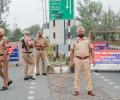
In a significant breakthrough, the Malerkotla Police apprehended two individuals for alleged involvement in espionage activities linked to a Pakistani official posted at the High Commission in New Delhi, said Punjab Director General of Police (DGP) on Sunday.
India on Friday called on the International Monetary Fund (IMF) to reconsider its $1 billion assistance to Pakistan, suggesting that Islamabad could use it for terror funding.
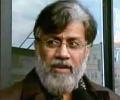
Mumbai terror attack accused Tahawwur Rana has moved an 'emergency application' with the United States Supreme Court against his extradition to India, claiming that he will be tortured there since he is a Muslim of Pakistani origin.
Khan said the events of May 9, 2023, in which military installations were targeted, were in fact a part of the "London Plan"- the sole purpose of which was to "eliminate Pakistan's largest political force, the Pakistan Tehreek-e-Insaf".

Prime Minister Narendra Modi on Thursday said India will identify, track and punish every terrorist and their backers who were responsible for the attack in Pahalgam "beyond their imagination". Addressing a public gathering in Madhubani, Modi said, "Today, from the soil of Bihar, I say to the whole world that India will identify, track and punish every terrorist and their backers. We will pursue them to the ends of the earth." He added that India's spirit will never be broken by terrorism and that terrorism will not go unpunished. Modi also assured that every effort will be made to ensure that justice is served, saying that the entire nation stands firm in this resolve. He thanked the people of various countries and the leaders who have stood with India in these times. Earlier, Modi and a large crowd gathered for a National Panchayati Raj Day programme observed silence for a few moments to pay homage to the victims of the terror attack in Pahalgam. Bihar Chief Minister Nitish Kumar condemned the terror attack and told the prime minister that the entire nation was united against terrorism.

While the Prime Minister did not spell out the details of the three instances, his remarks are being widely interpreted as a reference to the 2016 surgical strikes following the Uri terror attack, the 2019 Balakot air strikes after the Pulwama bombing, and the recent cross-border strikes as part of 'Operation Sindoor'.
Following Pakistani airstrikes in Afghanistan's Barmal district of Paktika province, which left 46 dead and six injured, the Ministry of Foreign Affairs of Afghanistan on Wednesday summoned the Charge d'Affaires of the Pakistani Embassy in Kabul.
'Unfortunately, India and Pakistan could learn a 'lesson' from this conflict that will make them more likely to use these weapons against each other in the future.' 'Rounds of missile and drone attacks could be more routine features of their hostility, just like artillery fire has become a familiar fact of life along the Line of Control.'
An Indian delegation met top officials of the United Nations Office of Counter-Terrorism (UNOCT) and Counter-Terrorism Committee Executive Directorate here even as New Delhi stepped up efforts to designate The Resistance Front, a Lashkar-e-Tayyaba proxy, as a UN-listed terror outfit for its alleged involvement in the Pahalgam attack.
The 'mediation' by the United States from behind the scene on the diplomatic track appears to be once again working, which calls on both Delhi and Islamabad to show restraint and pull back from a military confrontation, notes Ambassador M K Bhadrakumar.
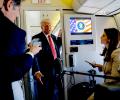
Two 'very smart' leaders of India and Pakistan decided to end last month's conflict that could have turned into a nuclear war, United States President Donald Trump said after holding a rare luncheon meeting with Pakistan army chief Field Marshal Asim Munir at the White House.
The United States on Thursday said it supports India's right to defend itself and its fight against terrorism as US Defence Secretary Pete Hegseth dialled Defence Minister Rajnath Singh amid rising tensions between India and Pakistan over the Pahalgam terror attack.

'I am the daughter of a martyr and had lost my father in Kashmir in 1994. I understand what drastic circumstances life brings in front of you.'
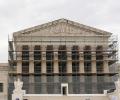
The US Supreme Court has denied the application of Tahawwur Rana, a Canadian national of Pakistani origin accused in the 2008 Mumbai terror attacks, seeking a stay on his extradition to India. Rana, currently detained in Los Angeles, had submitted the application after Associate Justice Elena Kagan initially denied it. Despite a renewed appeal, the Supreme Court ultimately rejected the request.

Chief of Air Staff Air Chief Marshal A P Singh on Thursday flagged serious concerns over inordinate delays in various defence acquisition projects and failure to stick to delivery schedules for supply of key platforms even as he hailed Operation Sindoor as a 'national victory'.
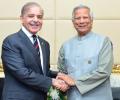
The visit to Dhaka by the Pakistani military officials came after a delegation of Bangladeshi military officials toured Pakistan and held meetings with the three service chiefs.
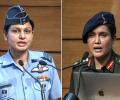
India conducted precision strikes on nine terror targets in Pakistan and Pakistan-Occupied Kashmir, targeting terrorist infrastructure to deter further attacks. The operation, codenamed 'Operation Sindoor', was detailed by two women military officers, Col Sofiya Qureshi and Wing Commander Vyomika Singh, at a press briefing in New Delhi. The officers highlighted the precise nature of the strikes, emphasizing the use of "niche technology weapons" to ensure no collateral damage. The briefing showcased India's military prowess and the growing role of women in the armed forces.
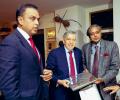
All-party parliamentary delegations on Friday met leaders and diplomats from several countries to galvanise international action against terrorists and decisively counter the tactics of those who perpetrate, support and sponsor cross-border terror activities against India.
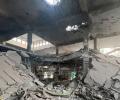
In a strong retaliation to the Pahalgam massacre, India's armed forces early Wednesday destroyed nine terror sites including that of Jaish-e-Mohammad and Lashkar-e-Taiba in Pakistan and Pakistan-occupied Kashmir (PoK) using deep strike missiles in a 25-minute-long 'measured and non-escalatory' mission.

Tahawwur Hussain Rana, an accused in the 2008 Mumbai terror attacks, has been extradited to India from the US. Former home secretaries believe he will be convicted and could face the death penalty. Rana was an associate of David Coleman Headley, who played a key role in the attacks. The extradition is seen as a significant achievement for India and a message to terrorists that they will face justice. Rana's testimony is expected to provide valuable information about the planning and execution of the attacks.
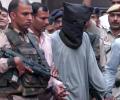
The National Investigation Agency has informed a Delhi court that Mumbai attack accused Tahawwur Rana could spill the beans on the ongoing and future terror plans of outfit Lashkar-e-Taiba and its chief Hafiz Saeed for India.

Pakistan's participation in the tournament, to be held in Rajgir, Bihar is in serious doubt because of the tensions between the two countries after the Pahalgam terror attack.

'If they aim to remain aligned with the public sentiment, as any democratic government should, then they must respond. Why else would the prime minister have cut short his visit to Saudi Arabia? And why would he have instructed the home minister himself to travel to Srinagar to assess the situation firsthand? This suggests that something is indeed being planned. I am quite certain of that, although the exact form it will take remains to be seen.'

Tahawwur Hussain Rana, a Pakistan-born Canadian national and close associate of David Coleman Headley, is set to be extradited to India from the US. Rana was involved in the planning and execution of the 2008 Mumbai terror attacks, which killed 166 people, including six Americans. He assisted Headley in obtaining a visa for India, established a front company in Mumbai, and helped in reconnaissance of targets in Mumbai and New Delhi. Rana was convicted in the US for providing material support to Lashkar-e-Taiba (LeT) and sentenced to 14 years in prison. His extradition to India will allow authorities to question him about his involvement in the Mumbai attacks and potentially uncover new information about the role of Pakistani state actors.
He went on to say that even though this has not been discussed, he is going to 'increase trade substantially with both of these great Nations.'
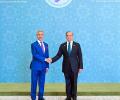
It was said that Sharif wanted the PML-N-led coalition government to utilise all available diplomatic resources to restore peace between the two nuclear-armed states, saying he was not keen on taking an aggressive position, The Express Tribune reported.

The NIA has charge sheeted Mumbai resident Amaan Salim Shaikh, a key accused in a conspiracy by Pakistani intelligence operatives to honey trap Indian Navy personnel to gather secret information on defence establishments, an official statement said on Friday.

Revenues from Bangladeshi patients have declined by 30% to 35% in 2024-2025. Bangladesh typically accounts for 70% to 75% of all medical visas issued by India.

The Indian government has dismissed claims of a suicide attack on an Army brigade in Jammu and Kashmir and a drone attack in Punjab as "fake news." The Press Information Bureau's Fact Check Unit found the claims to be false and attributed the spread of disinformation to coordinated efforts by certain social media handles and mainstream media in Pakistan. The government urged citizens to rely on verified sources and refrain from sharing unverified content.
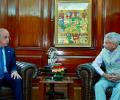
India briefed envoys of around 45 nations on the Pahalgam terror attack and its link to cross-border terrorism. The envoys were briefed in two batches by senior officials of the Ministry of External Affairs (MEA). India also announced punitive measures against Pakistan, including expulsion of Pakistani military attaches, suspension of the Indus Water Treaty of 1960 and immediate shutting down of the Attari land-transit post. Pakistan responded by shutting its airspace to all Indian airlines and suspending trade with New Delhi.

Indian Army launched Operation Sindoor on May 7 to destroy nine terror infrastructures in Pakistan and Pakistan-Occupied-Kashmir in retaliation to the Pahalgam terror attack. All subsequent retaliations to Pakistani offensives were carried out under the moniker Operation Sindoor.
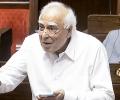
Rajya Sabha MP Kapil Sibal has congratulated both the previous UPA government and the current dispensation for the extradition of Tahawwur Hussain Rana, the mastermind behind the 2008 Mumbai attacks. Sibal expressed confidence that the extradition will shed light on the involvement of individuals within Pakistan's establishment in the attacks. Rana is being questioned by the National Investigation Agency (NIA) to uncover the full extent of the conspiracy behind the deadly 2008 terror strikes. Sibal highlighted the efforts of the UPA government in establishing the NIA and pursuing Rana's extradition, and also acknowledged the current government's success in bringing him back to India. The interrogation is expected to focus on Rana's potential ties to the Lashkar-e-Taiba (LeT) and his role in the Mumbai attacks.

The assailants claimed they hacked Lal to death to avenge an alleged insult to Islam.
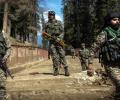
'If there is a military standoff eyeball to eyeball on the western border, the Chinese could create problems by making movements in the north, in our northeast, which could involve us tying down some forces there so that could stretch our military actions.'

In controversial remarks, Maharashtra Congress leader Vijay Wadettiwar on Monday said terrorists have no caste or religion and questioned veracity of the claim that terrorists asked about faith of tourists before killing them in Kashmir's Pahalgam town last week.

What? No one's calling them anti-national, no trolling, no abuses or threats, no FIRs??
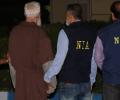
Tahawwur Hussain Rana, a key accused in the 26/11 Mumbai terror attacks, was brought to India on Thursday after being "successfully extradited " from the US, the National Investigation Agency (NIA) said. The 64-year-old Canadian citizen of Pakistani origin landed in Delhi in a special plane on Thursday evening, ending days of speculation of when and how he will be extradited, officials said. The NIA said in a statement that it had secured the successful extradition after years of sustained and concerted efforts to bring to justice the key conspirator behind the 2008 mayhem that claimed 166 lives. Rana is accused of conspiring with David Coleman Headley alias Daood Gilani, and operatives of designated terrorist organisations Lashkar-e-Taiba (LeT) and Harkat-ul-Jihadi Islami (HUJI) along with other Pakistan-based co-conspirators, to carry out the the three-day terror siege of India's financial capital.
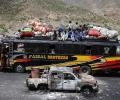
'No military offensive by Pakistan will end the insurgency in Balochistan without simultaneous, concerted efforts toward political dialogue to de-escalate tensions.'

'Pakistan's only concern has been while they were on the FATF watch list was to distance their State institutions and organs from any direct connection with the actual execution of militancy inside Kashmir.'
